
What could possibly go wrong? I ask myself this question during the site visit, as I’m developing a project plan, as I’m quoting a project and daily as I walk through a project, reviewing progress and inspecting work quality or quality control. As I review what could go wrong, I assign a percentage of risk to the event. I balance the risk against the potential reward to decide if the risk is justified. Every action has risk. There is risk to an object sitting in a dark, climate-controlled storage facility. It’s minimal but it is there and for every movement or action taken by an art object that risk is increased. How does one assign risk? There is no math to this. It is partially intuitive based on experience and actions fall into general categories of low-risk, some-risk, high-risk and dangerous actions. Risk isn’t just the action but the action plus the variables and the variables are what direct us to adjust our actions.
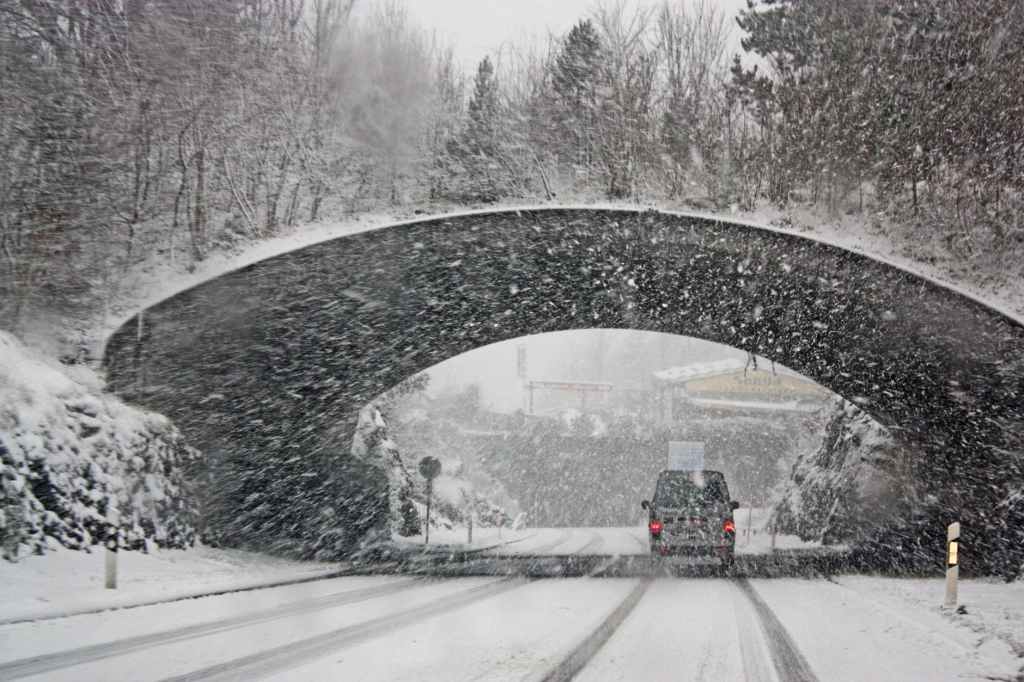
You judge and weigh risk everyday and base your judgements not just on the action but on the action and the variables. For example; you need to walk down your driveway to get to your car and drive to work. On a bright sunny day there is minimal risk that you will be damaged walking to your car. On a rainy, windy day there is some risk and you may take precautions by using an umbrella or holding your hat tight on your head, so it doesn’t blow away. The risk isn’t great enough to stop you from walking to your car and driving to work. In this case work is the reward and if you missed work every time there was some risk you would soon be unemployed, so we accept some risk and prepare for it. Now it’s a snowy, icy day. You have to decide if the risk is worth the reward. You adjust your protections by adding clothing to diminish the cold and you walk slowly and gingerly so as not to slip and fall. You know you can’t stay in all winter, so you adjust and take cautions to control the risk. The following day is a full-blown blizzard with high winds, snow and white out conditions. You decide to stay home as the risk of an accident and damage are far too great compared to the reward. What if the reward changed would you accept the risk? Let’s say you were getting married that day or you or someone you care for needed to get to a hospital, would you consider taking the risk? The action affects the risk and the risk can be mitigated by the reward. There is no absolute as there are always variables. You would never grab an infant by the arm and run out of your house to go shopping but you would grab them and run if the house was on fire.
I will now give an official name to a project manager’s mantra “what could possibly go wrong?” and call it risk management. Risk management has specific definitions depending on the industry. It is a term used in multiple industries and it is a specific course of study for business, finance and medicine. The core definition of risk management is similar throughout all industries and it can easily be adapted to the art-industry’s needs. Risk management is the recognition and assessment of risk while simultaneously establishing procedures and making the necessary adjustments to avoid or reduce its affect.
Where should you begin to identify your projects risks? You should start by identifying the states or actions that are hazardous to art objects. Let me state that I am not a conservator. I don’t have the background education or the degree. Let me also state that conservators are usually not art-movers, packers or craters. The increased risk that impacts a collection happens somewhere between these two disciplines and requires input from both areas which requires dialogue, mutual respect and an understanding of each other’s roles on the project. I’ve worked with conservators for decades and the ten events I will identify are guidelines for standard practices or they are red flags that would require you to call in a conservator for their opinion. Most of what I will discuss below as risk management is also known as preventative conservation but there are differences between the two.
Preventative conservation is defined by the ICOM-CC (International Council of Museums-Committee for Conservations) as “all measures and actions aimed at avoiding and minimizing future deterioration or loss. They are carried out within the context or on the surroundings of an item, but more often a group of items, whatever their age and condition. These measures and actions are indirect – they do not interfere with the materials and structures of the items. They do not modify their appearance.
Examples of preventive conservation are appropriate measures and actions for registration, storage, handling, packing and transportation, security, environmental management (light, humidity, pollution and pest control), emergency planning, education of staff, public awareness, legal compliance.”
Conservators are responsible for remedial conservation and restoration but everyone that works with a collection is responsible for its safety and you, the project manager, are responsible for ensuring the objects in the collection are not at risk during the project. It is also your responsibility to have considered and taken every measure possible to limit the potential for future or deferred damage as the result of the actions taken during the art-handling, movement and storage of the collection.
By the definition of preventative conservation, you are responsible for always taking actions that have the absolute least amount of risk possible to the artwork. In practice this is not true. In practice you are taking calculated risks and choosing actions that have the least risk involved. This is risk management, and this is the area where you will have conflict between stakeholders. The conflict is between choosing the action that has no risk but is costly or the action that has managed risk and fits the approved budget. The simplest example of weighing risks as opposed to eliminating all risks is in the daily use of non-archival packing materials for short-term or local transportation of art objects. Non-archival materials like standard cardboard or Esther-foam are known to have long-term detrimental effects on artwork. They off-gas, crumble and deteriorate over a very short period of time. They are used for short-term packs because archival materials could be cost prohibitive for a single artwork but would be a budgeting disaster for a long-term project. The risk is acknowledged and managed by isolating the objects from the non-archival materials and quickly unpacking at the receiving end. The risk is that the isolation leaks or as in a previous example the object is not unpacked as quickly as expected. As the project manager it would be your responsibility to ensure that neither of these things happens and you do this during your quality control walk throughs of your project. Adhering to consistent quality control inspections of your project is one form of practicing risk management for the collection.
There are ten primary events that can cause immediate or deferred damage to your collection. You need to constantly monitor these items and include risk management measures to control them in your planning for budget and time. I will name them here and discuss them further in my next blog.
- Deviations in temperature and humidity.
- Vibration.
- Moisture.
- Light.
- Violent or sudden movement.
- Hits or strikes.
- Dirt and vermin.
- Improper packing materials.
- Improper storage equipment.
- Improper handling.
Some of these ten items; temperature and humidity, vibration, moisture, light, dirt and vermin, are inherent in movement or affected by location or environment. That means they cannot be controlled but you can prepare for them. You begin this preparation during the initial site visit stages and acknowledge them in your project analysis and budget. Improper packing materials, storage equipment and handling should be addressed in your budget plan and during your project training. These are items you would constantly scan during your quality control reviews. Unless your truck gets rear ended, hits or strikes, and violent and sudden movement usually occur when movement is rushed. This usually occurs when the project numbers have been misquoted or the scope of the project changes and art-handlers are asked to move too quickly. The art-handler will be blamed but the real cause of the damage is the request to do more and faster, This request increased risk above and beyond normal activity. The art-handlers went from walking to their car on a sunny dry day to walking to their care on a snowy icy day. If you knowingly set your project goals too high you have increased risk that led to the damage. These are the most difficult risks to prepare for because they are usually caused by the unrealistic expectations of management. An increase in scope is cause for a contingency amendment not a work faster, do more request. If you don’t know what a contingency amendment or a change in scope mean stay tuned. I will discuss them in future blogs.

 Chuck Agro - Project Management For The Arts